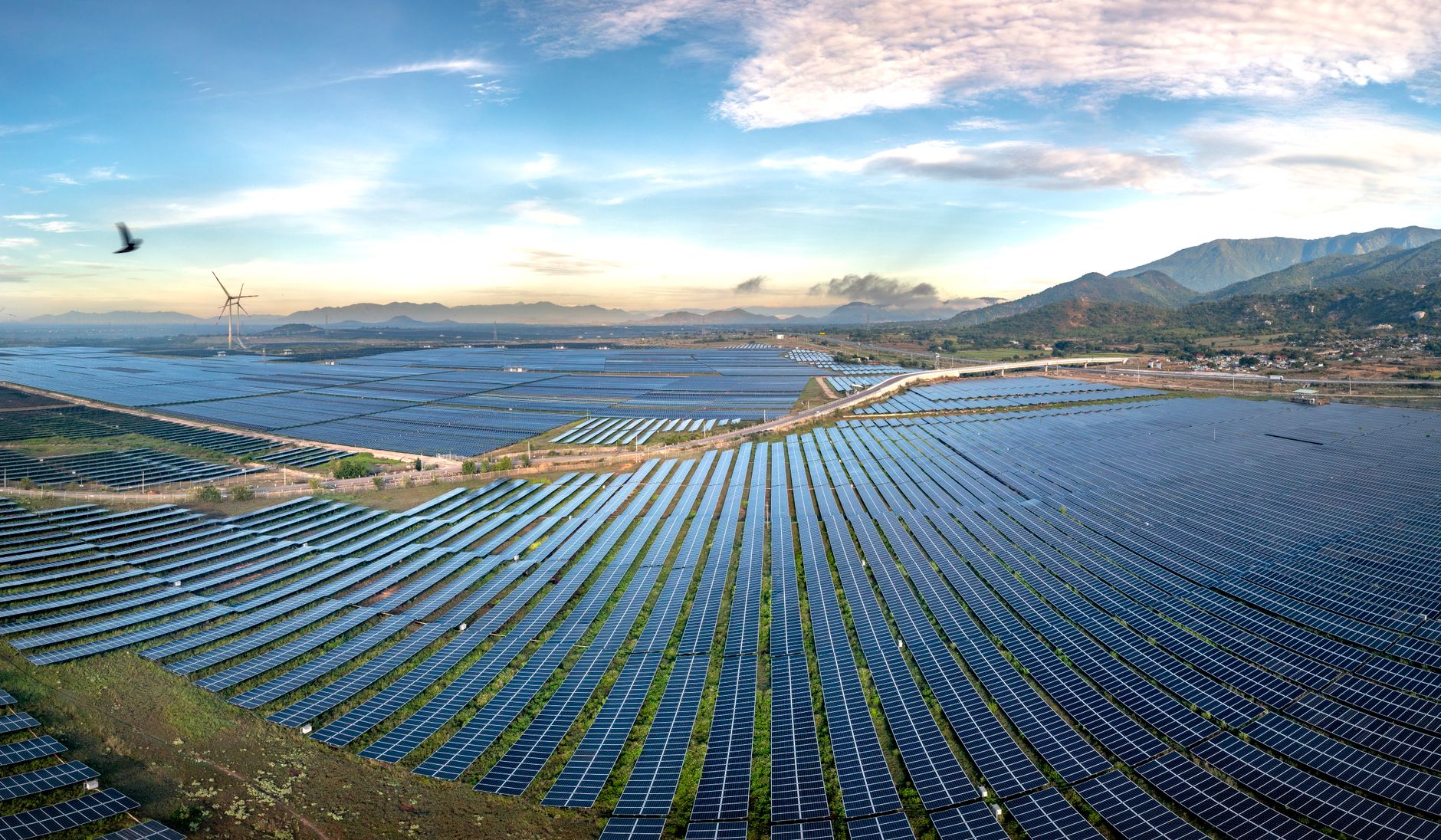
The Dholera solar park is an ultra-mega renewable-energy project near Dholera SIR, widely described as one of the world's largest solar parks and built in phases rather than switched on all at once. Its purpose is to supply large-scale, low-carbon power to a region designed around energy-hungry industry, most notably the Tata Electronics semiconductor fab, which needs vast, stable, clean electricity. Capacity is commissioned in stages toward a reported multi-gigawatt, multi-thousand-megawatt target, so the honest framing is one of the world's largest, phased, rather than a single finished number.
If you have seen Dholera called home to "one of the world's largest solar parks," that description is broadly right, with an important caveat: it is being built in phases, so it is best understood as a growing capacity target rather than a single finished plant. This explainer covers what the Dholera solar park is, how the phased build works, and why large-scale clean power sits at the centre of the region's whole design. Every figure here is kept as reported or described qualitatively, because precise phase-wise capacity moves as commissioning continues.
The short answer
The Dholera solar park is an ultra-mega renewable-energy project associated with the Dholera region, developed in stages toward a reported multi-gigawatt target. Its job is simple and strategic: supply large volumes of low-carbon electricity to a greenfield region that was planned around energy-intensive industry. In a place building India's first commercial semiconductor fab, cheap, clean and reliable power is not a nice-to-have, it is core infrastructure. For the wider picture of the region it serves, see what Dholera SIR is.
What "ultra-mega" and "phased" actually mean
Two words do most of the work in every headline about this project, so it helps to define them plainly.
- Ultra-mega: a very large solar park in the top tier of scale, the kind measured in the multi-thousand-megawatt range rather than the tens or hundreds of megawatts of a typical plant. That scale is why it is grouped among the world's largest.
- Phased: capacity is added and commissioned in stages over time. A park like this does not switch on at full output on day one; blocks come online progressively as land, grid connection and installation complete. So the live capacity today is a portion of the eventual target.
This is why the careful framing is "one of the world's largest, phased." A single fixed megawatt number can mislead, because the operational figure keeps rising as new phases are commissioned toward the reported multi-gigawatt target.
Why a solar park sits at the heart of Dholera
Dholera was not designed as a residential suburb that later added industry. It was planned as an industrial city, the flagship node of the Delhi-Mumbai Industrial Corridor, and industry on that scale runs on power. A large captive-scale renewable source near the region does several things at once: it improves energy security, it supports sustainability commitments, and it makes the location more attractive to manufacturers who increasingly want clean power in their supply chain.
The clearest example is the Tata Electronics semiconductor fab. A fab is one of the most power-hungry facilities in modern industry: it needs enormous, uninterrupted, high-quality electricity, and its owners increasingly want that power to be low-carbon. A large solar resource in the same region is exactly the kind of backbone that makes such a plant viable and credible. The solar park and the fab are best read as two halves of one industrial-city design, not separate stories.
The Dholera solar park at a glance
| Aspect | What we can say | Note |
|---|---|---|
| Type | Ultra-mega solar / renewable-energy park | Among the largest tier of solar projects. |
| Scale claim | One of the world's largest solar parks | Widely reported; treat as a phased target, not a finished single plant. |
| Capacity target | Multi-gigawatt, multi-thousand-MW range | Reported target. Live capacity is a portion of this and grows by phase. |
| Build approach | Commissioned in phases over time | Blocks come online progressively; full target is a long-horizon figure. |
| Strategic purpose | Clean, large-scale power for the region and its industry | Supports energy-hungry anchors like the semiconductor fab. |
What large-scale clean power means for the region
For anyone trying to understand Dholera's prospects, the solar park is a signal as much as an asset. It shows the region is being equipped, not just marketed. Reliable, low-carbon power at scale strengthens the pitch to manufacturers, supports the sustainability story that global companies now demand, and adds a second heavyweight anchor alongside the fab and the connectivity projects.
- Energy security: a large local renewable source reduces reliance on distant or fossil-heavy supply for an industrial region.
- Industrial pull: access to clean power is now a real factor in where global manufacturers choose to build.
- Sustainability alignment: pairing heavy industry with renewable generation supports the low-carbon commitments large buyers and investors expect.
- Regional credibility: a working mega solar park is visible proof that Dholera's infrastructure ambitions are being executed, not just planned.
How to think about it honestly
The accurate, non-hyped read is this: Dholera has one of the world's largest solar parks under phased development, built to supply the large, clean, reliable power that an industrial city and its semiconductor anchor require. It is a genuine strategic asset. Just hold the scale claim and the capacity figure loosely, as a phased target that keeps growing, rather than a single finished number, and verify current figures before relying on them for any decision.
Frequently asked questions
Frequently asked questions
What is the Dholera solar park?
It is an ultra-mega renewable-energy project associated with the Dholera region, widely described as one of the world's largest solar parks and built in phases toward a reported multi-gigawatt capacity target. Its role is to supply large-scale, low-carbon power to an industrial region.
Is the Dholera solar park really one of the world's largest?
It is widely reported as one of the world's largest solar parks. The important nuance is that it is phased, so its live capacity is a portion of the eventual target and grows as new blocks are commissioned. The honest framing is one of the world's largest, phased.
What is the capacity of the Dholera solar park?
It is developed toward a reported target in the multi-gigawatt, multi-thousand-megawatt range. Because it is commissioned in stages and reporting varies, the current live capacity is best verified from an official source rather than quoted as a single fixed number.
Why does Dholera need such a large solar park?
Dholera is planned as an industrial city and the flagship node of the Delhi-Mumbai Industrial Corridor. Industry at that scale, especially the power-hungry semiconductor fab, needs large volumes of reliable, clean electricity, which is exactly what a mega solar park is built to supply.
How is the Dholera solar park connected to the semiconductor fab?
They are two parts of one industrial-city design. A semiconductor fab is extremely power-intensive and increasingly needs low-carbon electricity, so a large local solar resource strengthens the case for building and running the fab in the region.
Is the whole solar park complete?
No. It is a phased project, so capacity is added and commissioned in stages over time rather than finished all at once. Treat the multi-gigawatt figure as a long-horizon target and confirm the currently commissioned capacity from an official source.